The Ultimate Guide to Thai Iced Tea
⚡ Quick Guide Takeaways
Thai Iced Tea, or Cha Yen (ชาเย็น), is a global obsession. But beyond the vibrant color and the ice, there lies a complex history of trade, colonial influence, and culinary evolution.
The Spiced Foundation
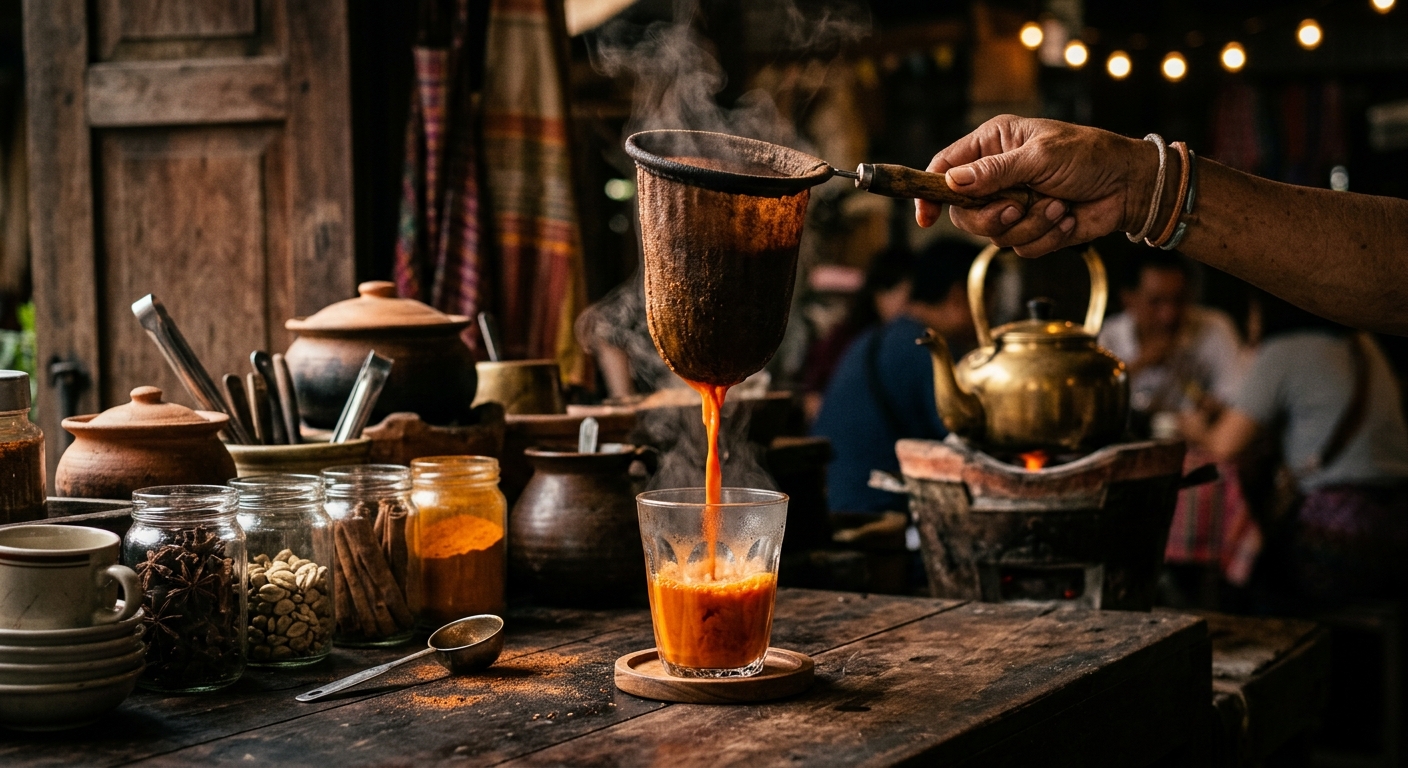
Unlike standard black teas, the base of an authentic Thai tea is a "Cha Thai" mix. This typically involves a strong Assam or Ceylon tea base, deeply roasted and infused with spices. Star anise provides the licorice-like depth, while crushed tamarind seeds contribute a subtle tartness.
Premium Gear
For those seeking the absolute pinnacle of flavor, we recommend the Artisanal Stainless Filter for maximum aeration and clarity.
How We Test
Every recipe on this site is brewed against the benchmark that matters: the vendor on the corner in Bangkok who has been pulling tea for thirty years. We brew a batch, taste it beside the street original, adjust one variable, and repeat until they match. Ratios are measured by weight rather than by eye, because a "tablespoon" of loose tea varies by more than thirty percent depending on how you scoop it.
What Cha Yen Actually Is
Thai iced tea is a strongly brewed, spiced black tea, sweetened while hot and finished with two different milks over a full glass of ice. The name in Thai is cha yen (ชาเย็น), literally "cold tea." Order it hot and it becomes cha ron; order it without milk and it becomes cha dam yen; order it with lime instead of dairy and it becomes cha manao. Same base, four drinks — which is why menus in English use half a dozen different names for what arrives in the glass.
The two-milk finish is the part most home versions get wrong. Sweetened condensed milk goes in for sweetness and body; evaporated milk goes over the top for the pale swirl. Substituting fresh milk for both gives you something drinkable but flat, because neither the viscosity nor the caramelised sugar is there.
Why It Is Orange
The honest answer is food colouring. Traditional commercial Thai tea mixes include it, and once pale evaporated milk hits the deep brown brew the result reads as that unmistakable sunset orange. Uncoloured and artisan blends exist and taste effectively identical — they simply brew a natural reddish-brown. If the glow is what you are after, the decision is made at the shop, not the stove. We go deeper in why Thai tea is orange.
Caffeine, Calories and the Practical Questions
A 16 oz Thai iced tea carries roughly 40–80 mg of caffeine — less than a comparable coffee, more than a light green tea — and lands around 200–320 calories, almost all of which comes from the condensed milk and added sugar rather than the tea itself. That distinction matters, because it means the drink is far more adjustable than it looks: the leaf is essentially free of both sugar and calories. Full numbers are in the calorie breakdown and the caffeine guide.
Because the tea base is naturally free of sugar, dairy and gluten, most dietary questions come down to what gets stirred in afterwards — which is why there are workable vegan and keto versions of a drink that in its classic form is neither.
The Four Variables That Decide Your Glass
If your homemade version tastes weak, bitter, or looks muddy, it is almost always one of four things: the ratio (brew roughly twice as strong as you would drink it, because the ice melts), the water temperature (90–95°C — boiling scorches it), the steep time (five minutes; past seven it turns astringent), or the pour (pulling the tea aerates it and the slow milk pour creates the layer). Each of these is taken apart individually in the Brew Lab below.