Home › Facts & Health › Why Is Thai Tea Orange?
Why Is Thai Tea Orange?
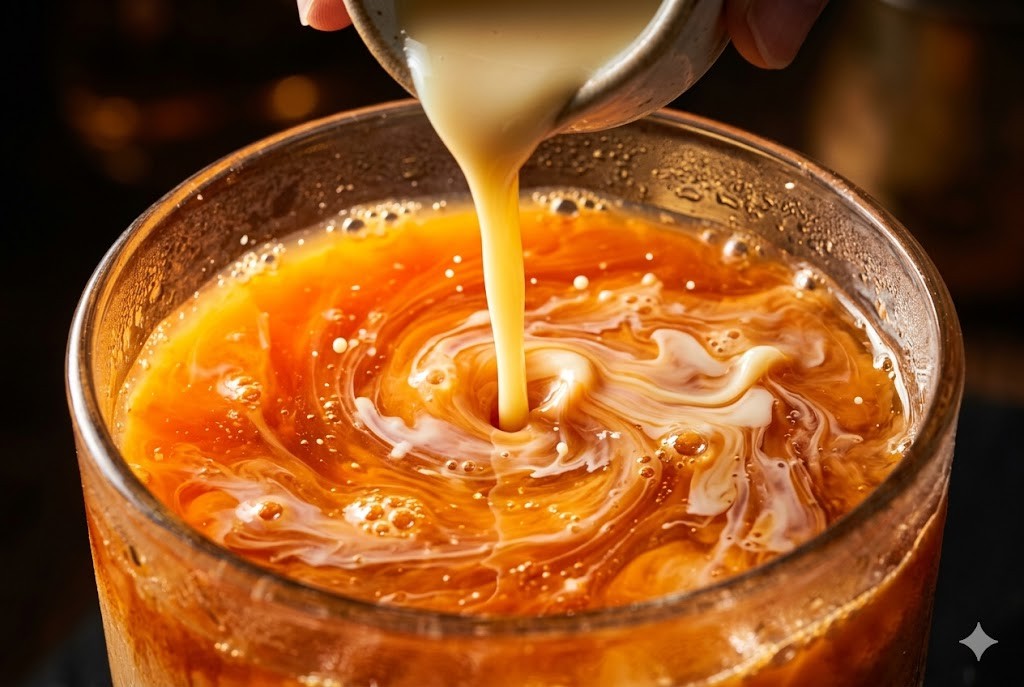
That electric sunset-orange is the signature of Cha Yen - and the most common question we get. The honest answer is part heritage, part chemistry, and part food coloring. Here's exactly what creates the glow.
The short answer
Most of the vivid orange you see in a glass of authentic street Thai tea comes from added food coloring - typically Sunset Yellow FCF (FD&C Yellow No. 6), sometimes with a touch of red. It is blended directly into the popular Thai tea mixes. Strongly roasted tea and a heavy pour of milk amplify the effect, but the headline color is a deliberate choice, not an accident of brewing.
Where the tradition came from
The base of Cha Yen is a heavily roasted black tea - usually Assam or Ceylon - spiced with star anise, tamarind, and sometimes vanilla. Roasting deepens the brew to a reddish-brown. Decades ago, vendors discovered that a small amount of coloring made the drink pop against a glass of ice and milk, and that bright, consistent hue became the visual brand of Thai tea itself.
The mix that makes the color
The blend behind nearly every Thai stall is ChaTraMue (the "Number One Brand"). It already contains the coloring, which is why a home batch made with it looks just like the vendor's.
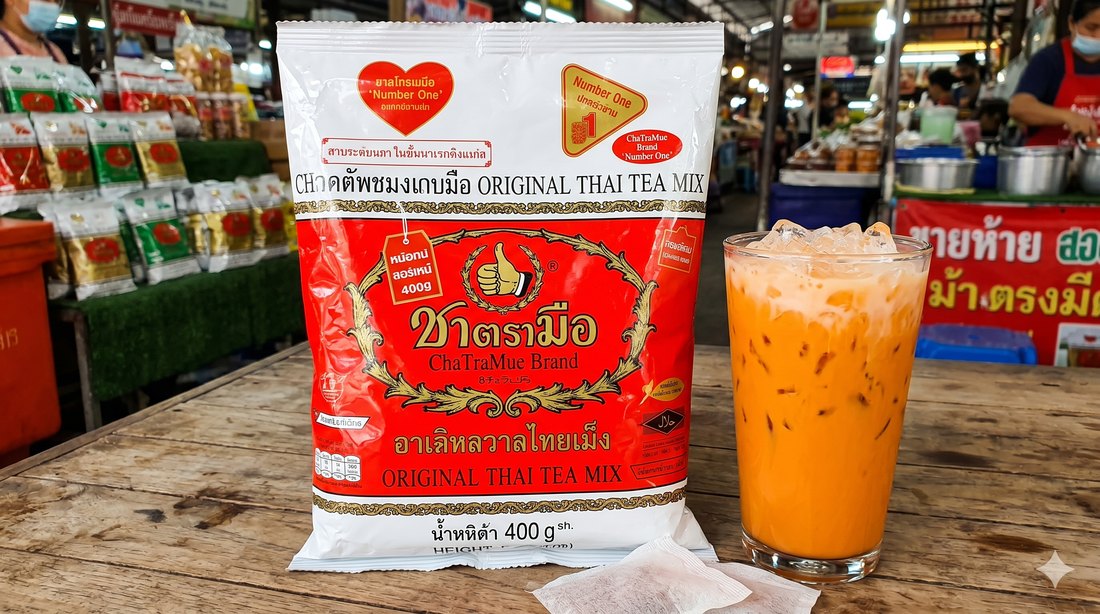
The classic dyed blend that produces the signature street-stall orange. One bag makes ~50 glasses.
Check price on Amazon →How to get the color naturally
Prefer to skip the dye? You can get a warm amber - not neon, but beautiful - using these levers:
- Use an uncolored Thai tea blend or strong roasted Assam and accept an amber tone.
- Brew strong. 4 tbsp of mix per 2 cups of water, steeped a full 5 minutes.
- Float evaporated milk on top - the contrast reads as the classic two-tone look.
- A pinch of annatto or turmeric nudges the color without artificial dye.
Does the dye change the taste?
No. Sunset Yellow is flavorless and used in tiny amounts. If you want the street-stall look with zero fuss, the standard mix is the easy path; if you want clean-label, brew strong and lean on the milk float.
FAQ
Is the food coloring in Thai tea safe?
Sunset Yellow FCF is an approved food additive in the US, EU, and most of Asia within standard limits. People who prefer to avoid synthetic dyes can choose an uncolored blend.
Can I make Thai tea orange without any mix?
Yes, partially - strong roasted black tea plus a pinch of annatto gives a natural amber-orange, though not the neon hue of the dyed versions.
Keep reading
- The authentic Cha Yen recipe, tested in Bangkok
- Best Thai tea brands to buy online
- How Cha Yen became a global icon
- What is Thai tea made of?
Disclosure: this page contains affiliate links. As an Amazon Associate, Chaayen earns from qualifying purchases at no extra cost to you. We only link gear we'd brew with.