Home › Facts & Health › ChaTraMue Red Bag vs Gold Bag
ChaTraMue Red Bag vs Gold Bag: Which One Should You Buy?
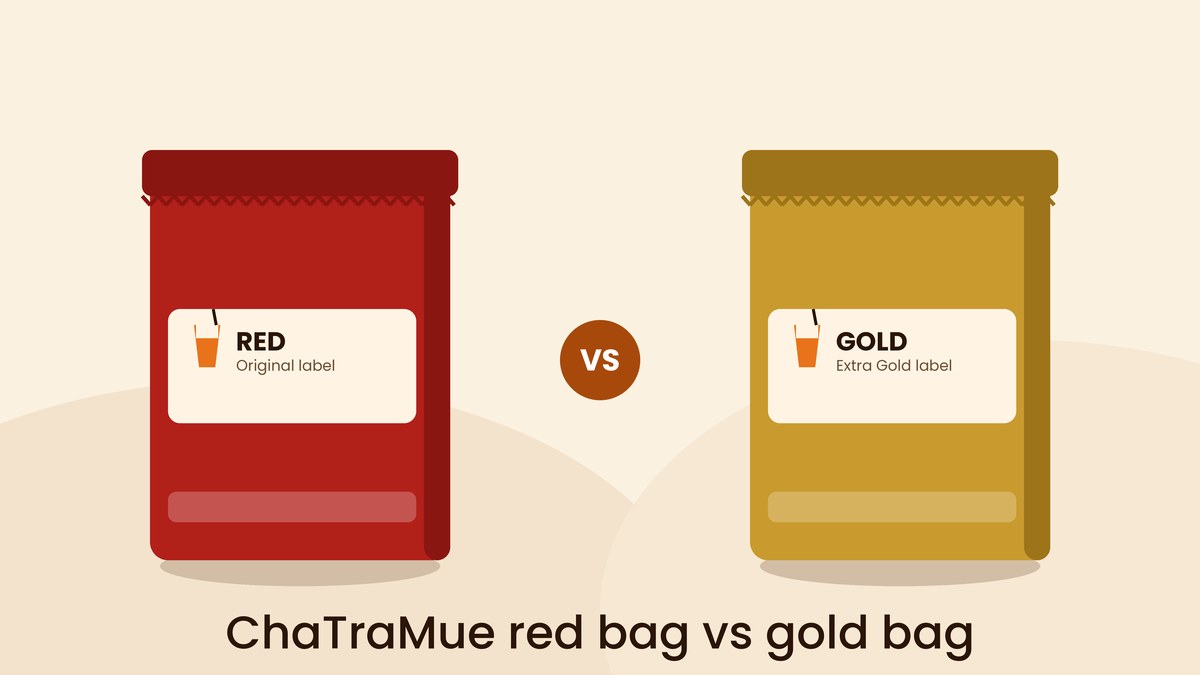
You are standing in the Asian grocery aisle, or hovering over two Amazon listings, and the same brand is offering you two bags at two prices. Nothing on either one explains what actually changes in the glass. Here is the difference, in the only terms that matter: colour, strength, sweetness, and how much tea you have to use to get where you want to go.
What the two bags actually are
Both are made by ChaTraMue — the Number One Brand, the tin-and-bag company whose product is behind most cha yen sold in Thailand. Both are a pre-blended mix, not plain tea: crushed black tea (Assam-style) already combined with sugar, flavouring and colouring, which is why the powder smells sweet and vanilla-ish before it ever meets water. If you have wondered why Thai tea is orange, that colour is coming out of these bags, not out of the leaf.
The red bag is the original formulation. The grind is coarse and you can see stem fragments in it. The US-market red bag lists Assam-style tea powder, sugar, artificial flavour and FD&C Yellow No. 6 — the sunset-orange colourant that does most of the visual work in a finished glass.
Extra Gold is the same company's higher grade. It is milled more evenly, with fewer visible stems, and shop descriptions and long-time buyers consistently describe it the same way: a stronger, bolder, more tea-forward cup. It brews browner and less neon. It also costs more per gram, which matters a lot if you are brewing by the pitcher.
| Red bag (Original) | Extra Gold | |
|---|---|---|
| Colour in the glass | Bright orange, restaurant-look | Deeper amber-brown, less neon |
| Flavour | Sweet, perfumed, creamy | Stronger tea, less perfume |
| Grind | Coarse, visible stems | More even, cleaner |
| Tea used per glass | More | Less — it is stronger |
| Cost per litre brewed | Lower | Higher |
| Best for | Classic cha yen, boba shops, big batches | Tea flavour that survives milk and ice |
The most likely reasons you are picking the wrong one
1. You want the restaurant colour, and you bought gold
This is the single most common regret. Gold brews a handsome amber-brown; it does not brew the almost fluorescent orange people photograph. Add evaporated milk to gold and you get a warm caramel colour rather than the sherbet-orange gradient. If the look is what you are after, red is the correct bag and no amount of technique will make gold behave like it.
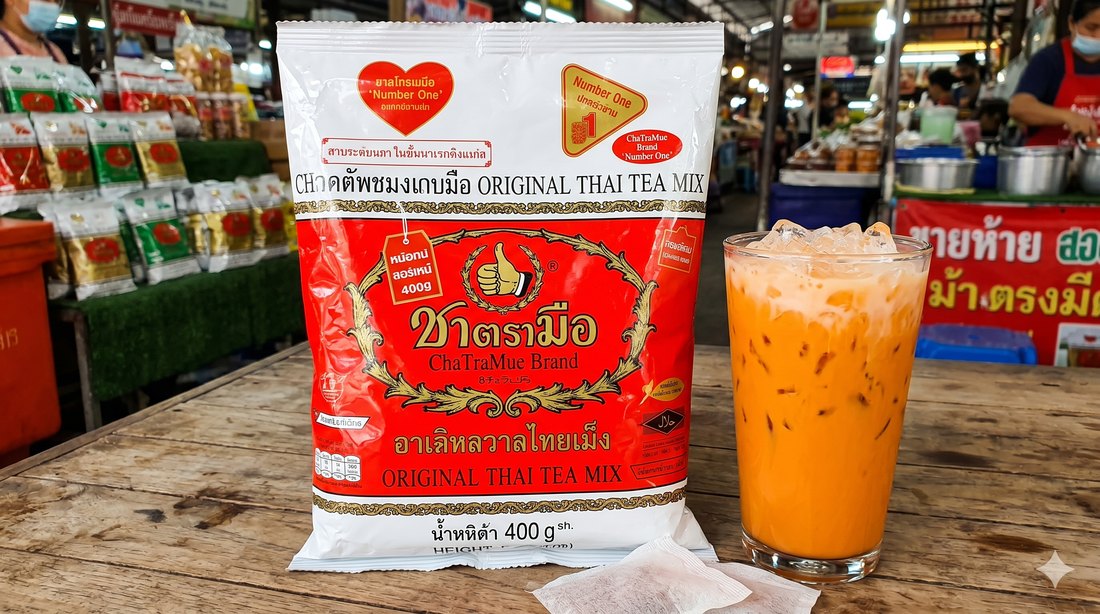
The default bag: the sweet, perfumed, unmistakably orange blend behind most Thai restaurant cha yen. Start here unless you have a specific reason not to.
Check price on Amazon →2. Your tea keeps disappearing under the milk, and you bought red
The opposite failure. Cha yen is a lot of dairy and a lot of sugar poured over a lot of ice, and a weak brew simply vanishes underneath it. If your finished glass tastes like sweet orange milk with no tea in it, you have two options: brew the red bag much stronger, or move to Extra Gold, which arrives at that strength with less powder. Gold is the shortcut for people who do not want to keep escalating the dose.
The stronger, more evenly milled grade. Same brand, bolder tea character, a browner brew. The upgrade to buy when flavour rather than colour is the problem.
Check price on Amazon →3. You are brewing in volume and did not check cost per litre
For one glass a week the price gap is irrelevant. For a household that drinks cha yen daily, or anyone making boba at home, it compounds fast — and this is exactly why Bangkok stalls run on the red bag. Their customers want orange and sweet, and red delivers both for less money per litre. Copying the stall is not a compromise here; it is the informed choice.
4. You are actually trying to avoid artificial colour
Then this comparison is the wrong one. Gold brews less orange, but that is a difference of degree, not a clean-label product. ChaTraMue also sells a separate uncoloured mix; it brews a natural brown and will never give you an orange glass. Decide which you want before you spend, because the two goals genuinely conflict. Formulations also vary between markets, so read the bag in your hand rather than trusting a listing photo.
5. You bought tea bags when you wanted loose mix (or the reverse)
Both grades are sold as loose powder in a foil pouch and as pre-portioned sachets. Sachets are tidy and travel well but lock you into one strength; loose mix lets you dial the ratio, which is the whole game with cha yen. If you are still working out your strength, buy loose and a filter sock. If you already know your ratio and hate mess, sachets are fine.
How to brew each one properly
The bags are not interchangeable at the same dose. Gold is stronger, so using your red-bag ratio with gold overshoots into astringency, and using your gold ratio with red gives you the thin, washed-out glass from cause 2. Real starting numbers, then adjust once:
- Red, loose: 2 heaped tablespoons per 250 ml water just off the boil, steep 4–5 minutes.
- Extra Gold, loose: about 1.5 heaped tablespoons per 250 ml, steep 3–4 minutes.
- Gold sachets: one sachet to roughly 300 ml, 3–5 minutes.
- Both: brew about twice as strong as you want the finished drink, because ice and milk will halve it.
- Both: strain the moment the timer ends. Leaving the powder sitting in the water is the fastest route to a bitter glass, and it hits gold harder because gold is already the stronger blend.
That last point is why the cloth filter sock is standard equipment at every stall rather than a nice-to-have. It lets a vendor lift the whole charge of tea out of the pot in one motion at the exact second the steep is done, and it catches the fine sediment that makes a home brew gritty — a real issue with the coarser red grind.
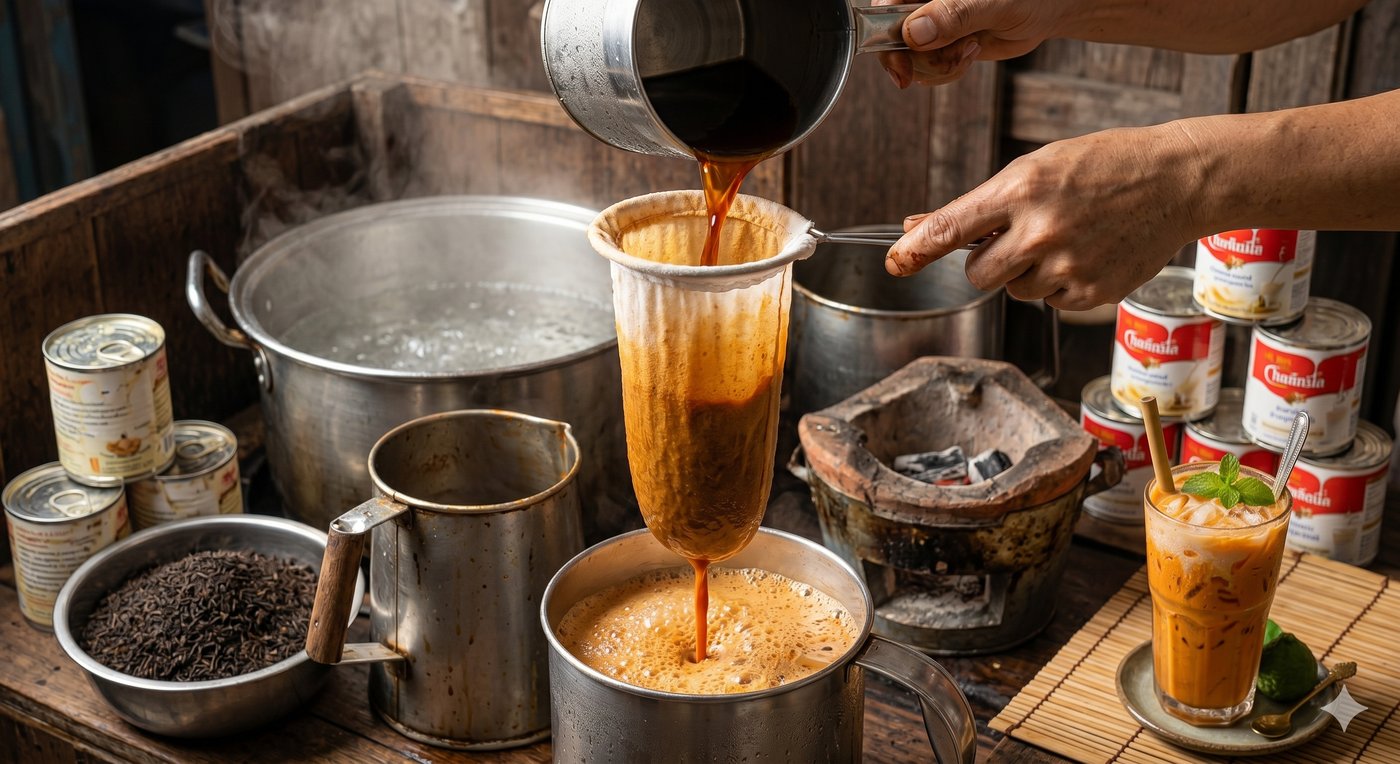
The stall tool. Lifts the tea out cleanly the instant the steep finishes and keeps the sediment out of the glass — the fix for both bitterness and grit.
Check price on Amazon →How to stop buying the wrong bag again
The decision reduces to one question: are you fixing the look or fixing the flavour?
- Fixing the look — not orange enough, does not look like the restaurant — buy red.
- Fixing the flavour — tastes thin, milky, no tea — buy gold, or brew red stronger first, since that is free.
- Brewing in volume, or making boba — buy red, on cost.
- Avoiding colourant — buy neither; look for the uncoloured mix and accept a brown drink.
- Genuinely unsure — buy the combo pack and run them side by side, same water, same milk, same ice. One afternoon settles it permanently.
One bag of each, so you can brew them side by side instead of guessing. The cheapest way to end this argument in your own kitchen.
Check price on Amazon →One honest caveat: once both are brewed to the right strength and buried under condensed and evaporated milk, the gap narrows a lot. Plenty of people who taste them blind, side by side, find the difference smaller than the price gap suggests. Method beats grade — a well-brewed red glass will beat a carelessly brewed gold one every time. If you want the full sequence, ratios and timings included, it is in the authentic cha yen recipe, and the wider brand landscape is covered in the best Thai tea brands.
Frequently asked questions
What is the difference between ChaTraMue red bag and gold bag?
The red bag is the original Number One Brand Thai tea mix: a coarse, stem-flecked Assam blend with sugar, artificial flavouring and added colour, which is what gives cha yen its signature orange. The Extra Gold bag is a more evenly milled, cleaner-looking blend with a stronger, more tea-forward flavour and a browner, less neon brew. Red is built for the classic sweet, creamy, bright-orange drink; gold is built for tea flavour that survives milk and ice.
Which ChaTraMue bag do Thai street vendors use?
The red bag. It is the cheapest per litre, it delivers the orange colour customers expect, and its sweet, perfumed profile is the flavour most people mean when they say a drink tastes like real Thai iced tea. If your goal is to match the stall or the restaurant, buy red — not gold.
Is ChaTraMue Extra Gold worth the extra money?
It is worth it if your complaint is that your tea tastes thin or washed out once milk goes in, or if you dislike how sweet and perfumed the red bag is. It is not worth it if you are chasing the restaurant look and taste, because gold brews browner and less bright, and costs more per glass to get there.
Does the gold bag have less food colouring than the red bag?
The gold bag brews a noticeably browner, less orange cup, and the two blends are labelled differently, but both mainstream bags still list added colour and flavouring. If avoiding artificial colour is your actual goal, neither of these is the answer — look for the separate uncoloured Thai tea mix, which brews a natural brown and will not give you an orange glass at all. Always read the bag you are holding, because formulations differ between markets.
How much ChaTraMue tea should I use per cup?
For the red loose mix, start at 2 heaped tablespoons per 250 ml of just-off-the-boil water and steep 4 to 5 minutes. Extra Gold is stronger, so drop to about 1.5 heaped tablespoons for the same volume, or steep 3 to 4 minutes. Both should be brewed roughly twice as strong as you want the finished drink, because ice and milk will dilute it.
Keep reading
- The best Thai tea brands, compared
- Where to buy Thai tea mix
- Why is my Thai tea bitter? Six causes and the fix for each
Disclosure: this page contains affiliate links. As an Amazon Associate, Chaayen earns from qualifying purchases at no extra cost to you.