Home › Facts & Health › Why Is My Thai Tea Bitter?
Why Is My Thai Tea Bitter? 6 Causes and How to Fix It
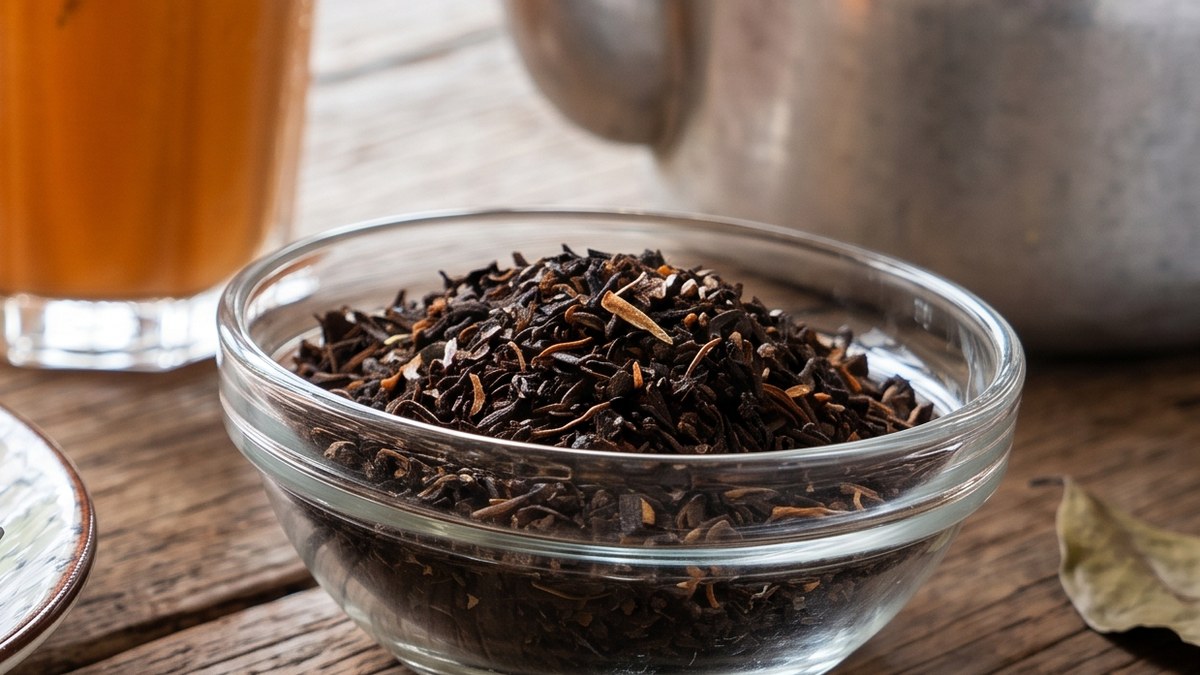
Your tea came out sharp, drying, almost tannic at the back of the throat - nothing like the smooth, sweet glass you had at the restaurant. The good news is that bitter Thai tea is nearly always one problem wearing six different hats, and it is fixable in about thirty seconds.
The most likely causes, in order
1. You steeped it too long
This is the cause about four times out of five. Thai tea mix isn't whole leaf - it's a fine, almost dusty cut, and the smaller the particle, the more surface area is exposed to the water. That means it extracts several times faster than the loose black tea you might steep for five to seven minutes without a second thought.
Three to five minutes is the window for a hot-brewed concentrate. At eight minutes you are pulling tannin rather than flavour, and by fifteen you have made something closer to a mouth-drying astringent than a tea base. If a recipe told you to steep for half an hour, it was describing a cold or long-steep concentrate method, which is a different technique with a different ratio - it does not transfer to a pot of boiling water.
2. Your water was at a rolling boil
Water held at a hard boil, or poured over the mix while still churning, extracts harshly and scorches the finer particles. Bring the kettle to a boil, then let it stand for thirty to sixty seconds before it meets the tea. You are aiming for water that is hot but settled - roughly 95°C / 205°F - not violently bubbling.
If you brew Thai tea often and want to stop guessing, an instant-read thermometer removes the variable entirely and costs less than a couple of café glasses.

Takes the guesswork out of "just off the boil." Also useful for the milk if you make hot cha yen ron.
Check price on Amazon →3. You used too much mix for the water
Bitterness and strength get confused constantly. A concentrate that is simply too strong reads as bitter even when the steep time was correct, because you are drinking more of everything - including the tannins. As a starting ratio, about one cup of Thai tea mix to one litre of water gives a concentrate you then cut with ice, milk and sugar. If you have been eyeballing it, measure once and you will usually find you were heavy-handed.
4. You squeezed the filter sock
This is the one that separates a home brew from a street brew, and almost nobody mentions it. When the tea has drained, the liquid still trapped in the leaf bed is the most over-extracted, most astringent part of the whole batch. Wringing the sock to get the last of it out is exactly the wrong instinct - you are deliberately adding the harshest fraction back into the pitcher.
Watch a vendor in Bangkok and you will see them lift and lower the sock to aerate, then simply set it aside still dripping. They do not squeeze. Let it drain under its own weight and accept that you lose a little volume.
The cloth filter that makes the pull-pour possible. It strains the fine mix properly, which a paper filter or fine mesh strainer struggles to do without either clogging or letting grit through.
Check price on Amazon →5. You left the tea sitting on the leaves
Extraction does not politely stop when the timer does. If you brew a pot, pour one glass and leave the rest in contact with the mix while you drink it, the remainder keeps pulling tannin the whole time. Twenty minutes later the second glass tastes noticeably harsher than the first, and people usually blame the mix rather than the method.
Strain the whole batch immediately, into a jug or bottle. Once separated from the leaves, the concentrate keeps in the fridge for several days without getting any more bitter - which is also why batch-brewing works so well.
6. You under-sweetened it
Cha yen is engineered as a sweet drink. The spice, the tannin and the sugar are balanced against each other, and if you cut the sugar and condensed milk sharply to make it "healthier," the astringency has nothing to push against and reads as bitterness. That is not a fault in the tea - it is a recipe that has lost its counterweight.
If you want a lighter glass, it is better to brew a weaker concentrate and keep the sweetness proportional than to brew at full strength and cut the sugar. Our calorie breakdown shows where the sugar actually sits if you want to trim it deliberately.
How to fix a batch you have already brewed
- Dilute, don't sweeten. Add hot water, evaporated milk or whole milk. Sugar masks bitterness rather than removing it, and you end up with something both harsh and cloying.
- Add a pinch of salt. A very small amount of salt in the pitcher measurably suppresses perceived bitterness - it is a standard trick behind Thai counters and it works on over-brewed coffee too. Start with less than you think.
- Add more condensed milk than usual. Fat and sugar together round off astringency in a way sugar alone cannot.
- Strain it again if there is sediment. Fine particles left in suspension keep extracting in the glass and add a gritty, drying edge.
- If it is genuinely undrinkable, keep it. Over-strong concentrate is excellent in popsicles or ice cream, where the sugar and dairy load is much higher and the bitterness disappears.
How to stop it happening again
Set a timer rather than trusting your judgement - four minutes is a safe default. Boil, wait a minute, pour. Strain the whole batch at once into a jug. Don't squeeze the sock. Keep the ratio consistent enough that you can adjust one variable at a time when something tastes off.
And if you have corrected all of that and it is still harsh, the mix itself may simply be old or low quality. Thai tea mix is a ground product and it stales; a bag that has been open in a humid kitchen for a year will taste flat and rough no matter how carefully you brew it. The brand comparison covers which mixes hold up.
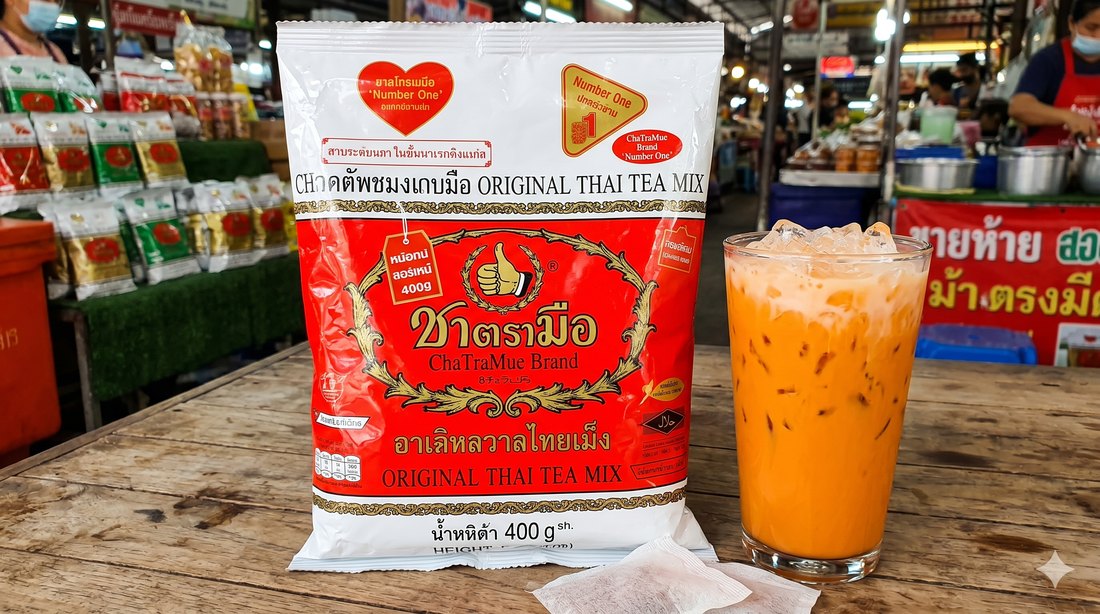
The benchmark blend used by most Bangkok stalls. If you are troubleshooting, brewing a known-good mix removes one more variable from the equation.
Check price on Amazon →For the full method from powder to pour - ratios, temperatures and the pull-pour technique - see the authentic cha yen recipe or the deeper Brew Lab.
Frequently asked questions
Why is my Thai tea bitter?
Almost always over-extraction. Thai tea mix is cut very fine, so it releases tannins much faster than whole-leaf tea. Steeping longer than about five minutes, using water at a rolling boil, or leaving the brewed tea sitting on the leaves will all push it into bitterness.
How do you fix Thai tea that is already too bitter?
Dilute it with hot water or milk rather than adding more sugar. Sugar masks bitterness but does not remove it, and you end up with a drink that is both harsh and cloying. A pinch of salt in the pitcher also suppresses perceived bitterness.
How long should Thai tea steep?
Three to five minutes for a hot-brewed concentrate. Thai tea mix is finely cut and extracts fast, so it does not need the long steep whole-leaf tea does. Strain it off the leaves as soon as the time is up.
Should I squeeze the Thai tea filter sock?
No. Wringing the sock forces out the most astringent liquid trapped in the leaf bed. Let it drain under its own weight. This is one of the most common differences between a home brew and a street-stall brew.
Does Thai tea get more bitter as it sits?
Only if the leaves are still in it. Once strained, Thai tea concentrate keeps for several days in the fridge without getting harsher. Left on the leaves, it keeps extracting and turns bitter within the hour.
Keep reading
- Authentic Thai iced tea (cha yen): the full method
- The best Thai tea brands, brewed side by side
- The Brew Lab: temperature, timing and the pull-pour
Disclosure: this page contains affiliate links. As an Amazon Associate, Chaayen earns from qualifying purchases at no extra cost to you.