Home › Facts & Health › Why Is My Thai Tea Curdling?
Why Is My Thai Tea Curdling? Separated, Grainy Milk Fixed
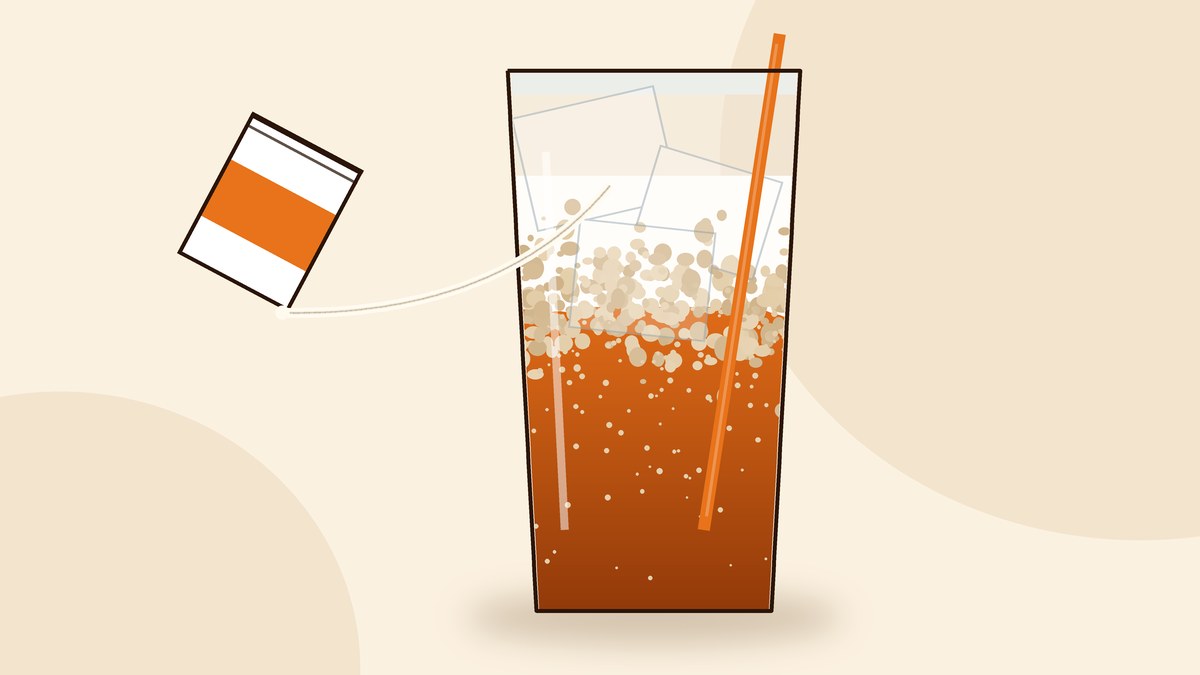
You poured the milk in and the glass turned grainy — little pale flecks suspended in the orange, or a layer that looks split rather than swirled. It is one of the most common ways a home batch of cha yen goes wrong, and in almost every case the cause is not the milk you bought. It is the temperature of the tea at the moment the two met.
First: is it actually curdled?
Worth checking, because two different things get called the same name. Separation is the smooth cream-over-orange layering you see in every photo of Thai iced tea. It is normal, it is deliberate, and it stirs back into a uniform drink in about two seconds. Curdling is grainy: flecks, specks or soft grains that stay visible after you stir and feel slightly rough on the tongue.
If you stir the glass and it goes evenly orange, nothing is wrong — that is the drink working as intended. If you stir and the grains are still there, read on.
The most likely causes, in order
1. The tea was still hot when the milk went in
This accounts for most cases. Brewed Thai tea concentrate is acidic enough and tannic enough that, at high temperature, it destabilises the proteins in dairy. The proteins clump, the fat comes out with them, and you get flecks. Cold tea does not do this to anything like the same degree, which is why iced cha yen is far more forgiving than a hot cup of tea with milk.
Home recipes tend to say "brew, then add milk," and if you follow that literally with a pot that is still steaming, you are pouring milk into near-boiling acidic liquid. Let the concentrate drop below roughly 60°C / 140°F before the milk sees it. If you brew often, a cheap instant-read thermometer turns this from a guess into a number.
The only reliable way to know whether your concentrate is at 60°C or still at 85°C. Also settles the "just off the boil" question when you brew.
Check price on Amazon →2. You are using a coconut or plant-based condensed milk
This one produces a very distinctive fault: hard little white specks that appear the instant the milk touches ice, and never dissolve. It is not curdling in the protein sense at all — coconut fat is solid at fridge temperature, so when it hits a glass packed with ice it simply sets. Dairy fat stays soft and does not do this.
If your flecks are firm and waxy rather than soft and grainy, switch products and the problem disappears with no change to your method. Our ranking of milks for Thai tea covers which dairy-free options hold up in an iced glass and which do not.
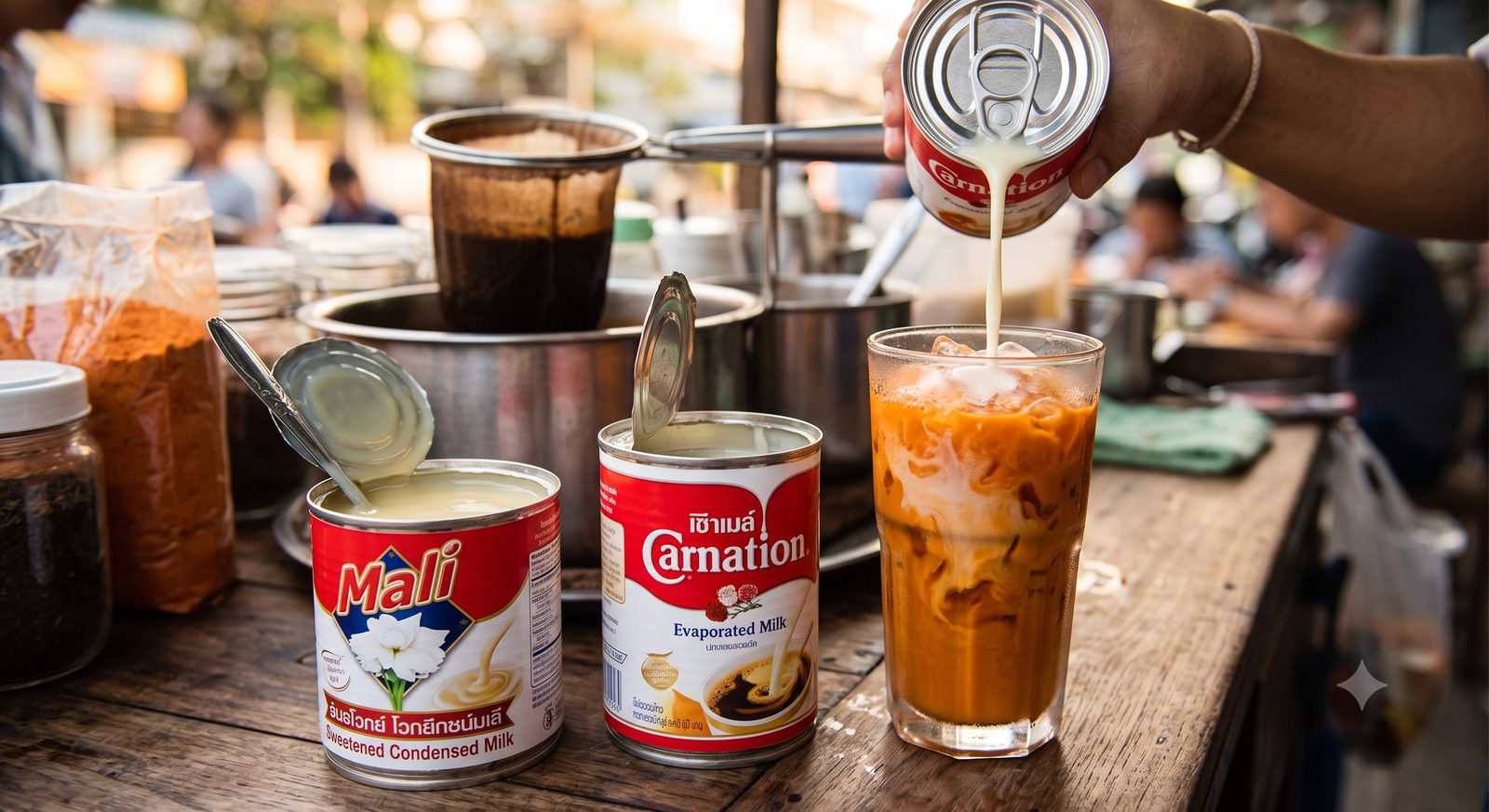
The standard Thai-stall sweetener. The sugar concentration and the heat treatment make it unusually stable, so it disperses into iced tea without splitting.
Check price on Amazon →3. The condensed milk went in straight from the tin
Sweetened condensed milk is a thick syrup, not a liquid. Spooned directly into a glass it sinks in ropes, sits on the bottom and refuses to disperse — and what does not disperse reads as lumps. People then stir harder, break the ropes into fragments, and conclude the milk curdled.
Loosen it first. Put your condensed milk in a small cup, add a tablespoon of warm water or a splash of the tea, and stir until it is a pourable cream. It will then blend in cleanly. A cheap handheld frother does this in three seconds and is also the fastest way to get evaporated milk fully incorporated.
Loosens condensed milk into a smooth cream in seconds, which is the difference between a clean swirl and a glass full of ropes.
Check price on Amazon →4. The milk was close to turning
Milk that is a day or two past its best is already slightly more acidic than fresh milk, and it will split on contact with hot tea when fresh milk would have survived. This is the one cause worth taking seriously, because it is also the one where the drink genuinely should not be drunk. Smell the milk before you blame the method — if it is sour, that is your answer.
Evaporated milk in a sealed can sidesteps this entirely, which is part of why it is the default at Thai street stalls: it is shelf-stable, consistent, and has a higher protein and mineral content that stands up to hot tea better than fresh milk does.
The workhorse dairy in cha yen. Shelf-stable, more heat-tolerant than fresh milk, and it gives the drink the body people associate with the café version.
Check price on Amazon →5. Something acidic got into the pitcher
Less common, but instant and dramatic when it happens. A lime-scented rinse aid, a pitcher that last held cha manao and was rinsed rather than washed, or a squeeze of citrus added "for brightness" will drop the pH far enough to curdle dairy on contact. If the split happened suddenly and completely rather than as scattered flecks, look at the container before you look at the milk.
How to fix a glass you have already poured
- Strain it. Pour the drink through a fine mesh sieve or a cloth tea filter sock. This removes the flecks completely and costs you nothing but a few seconds. It is the fastest rescue and it works on both dairy grains and set coconut fat.
- Re-emulsify off the heat. Once the liquid is cool, whisk or froth in a fresh tablespoon of loosened condensed milk. The added fat and sugar will carry the drink back to a smooth mouthfeel.
- Blend it. If the texture is still slightly rough, put the whole thing in a blender with ice and turn it into a frappé. Blending shears the grains down below the point where the tongue notices them, and the drink is not wasted.
- Do not reheat it. Applying more heat to a split drink makes it worse, every time.
- If the milk smelled sour, bin it. No fix applies to spoiled dairy.
How to stop it happening again
The reliable prevention is the order of assembly, and it is worth copying exactly from the street stalls, because their method removes the problem rather than managing it. A Bangkok vendor never pours milk into hot tea. The glass is filled with ice first, the brewed tea goes over the ice and is chilled almost instantly, and the evaporated and condensed milk go in last, onto liquid that is already cold. The milk never meets heat at all — and the layered pour that makes the drink photogenic is a by-product of that sequence, not a flourish.
For a home batch, that translates to:
- Brew, strain, then cool. Strain the concentrate off the leaves immediately — this also keeps it from turning bitter — and let it drop below 60°C, or chill it in the fridge if you are batching.
- Ice first, tea second, milk last. Never the reverse.
- Loosen the condensed milk in a cup before it goes anywhere near the glass.
- Use fresh dairy or canned evaporated milk, and keep plant-based condensed milk for drinks served without ice.
- Wash, don't rinse, anything that has held citrus.
Get those five right and curdling essentially stops being a thing that happens to you. The full sequence, with ratios and timings, is in the authentic cha yen recipe, and the temperature side is covered in more depth in the Brew Lab.
Frequently asked questions
Why is my Thai tea curdling?
Almost always because the milk met the tea while the tea was still hot. Hot, strong, slightly acidic tea destabilises milk proteins, and the fat and protein come out of suspension as flecks. Coconut or plant-based condensed milk can also solidify into specks the moment it hits ice, and milk that is close to turning will split on contact.
Is curdled Thai tea safe to drink?
If the milk was fresh and in date, yes — heat-induced curdling is a texture problem, not a spoilage problem. If the milk was old, or the drink smells sour, throw it out. The split itself does not tell you which of the two happened, so judge it by the smell of the milk, not the look of the glass.
What is the difference between Thai tea separating and Thai tea curdling?
Separating is the smooth cream-over-orange layering you see in every photograph of cha yen, and it is normal and intentional — it stirs back together into a uniform drink. Curdling is grainy: visible flecks or grains that do not disappear when you stir. Layers are fine. Grains are the fault.
Does condensed milk curdle in Thai tea?
Standard dairy sweetened condensed milk is very stable because the sugar and the heat treatment protect the proteins. Two things still go wrong: adding it straight from the tin so it sinks in ropes instead of dispersing, and using a coconut or plant-based condensed milk, whose fat sets into hard specks in a glass full of ice.
How do you fix Thai tea that has already curdled?
Strain the drink through a fine sieve or a tea filter sock to remove the flecks, then whisk in a fresh spoon of condensed milk off the heat. If the texture is still grainy, blend it with ice into a frappé — the grains disappear completely and the drink is not wasted.
Keep reading
- The best milk for Thai tea, ranked
- Why is my Thai tea bitter? Six causes and the fix for each
- Authentic Thai iced tea (cha yen): the full method
Disclosure: this page contains affiliate links. As an Amazon Associate, Chaayen earns from qualifying purchases at no extra cost to you.