Home › Facts & Health › Butterfly Pea Flower Tea
Butterfly Pea Flower Tea: Thailand's Color-Changing Blue Tea
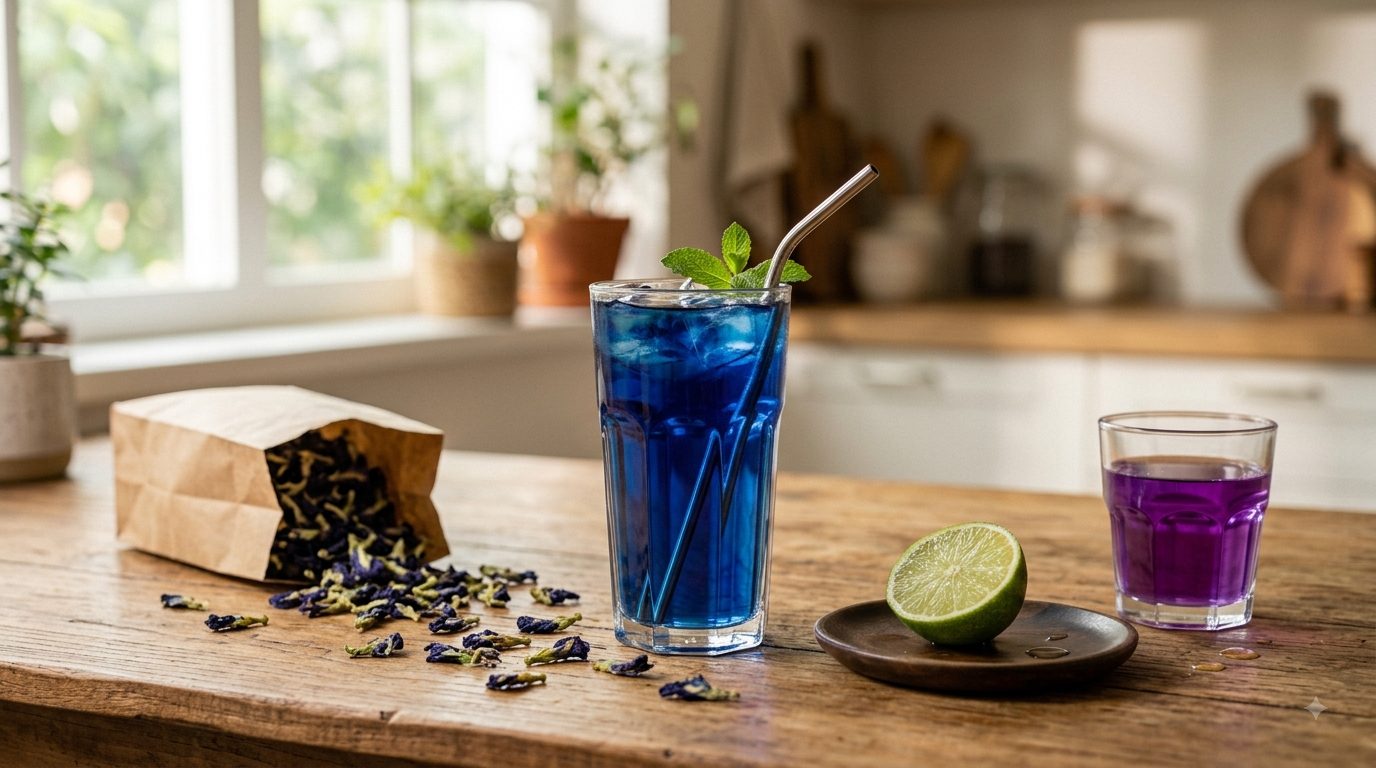
Cha yen isn't the only iconic drink in a Thai glass. Order a nam anchan in Bangkok and you'll get a sapphire-blue tea that turns violet, then purple-pink, the moment lime juice hits it — no dye, no tricks, just plant chemistry. Here's what butterfly pea flower tea actually is, what it tastes like, what the health claims are really worth, and how to brew a color-changing glass at home.
What is butterfly pea flower tea?
Butterfly pea flower tea is a caffeine-free herbal infusion made from the dried petals of Clitoria ternatea, a climbing vine that grows all over Southeast Asia. In Thailand the flower is called anchan (อัญชัน), and the drink — nam anchan — has been served in homes, spas, and street stalls for generations, usually iced with honey and a squeeze of lime.
Steep a handful of the deep-indigo petals in hot water and within a minute the water turns a startling royal blue. It looks artificial. It isn't. The color comes from anthocyanins — the same family of antioxidant pigments found in blueberries, red cabbage, and purple grapes, just unusually concentrated in these petals.
Because it doesn't come from the tea plant (Camellia sinensis), butterfly pea "tea" is technically a tisane — and that means zero caffeine, which puts it at the opposite end of the spectrum from a strong cup of cha yen.
The party trick: why it changes color
Anthocyanins are pH-sensitive. In neutral water they read blue; add acid and their molecular structure shifts, and so does the color. In practice:
| What you add | pH direction | Color you get |
|---|---|---|
| Nothing (plain water) | Neutral | Royal / sapphire blue |
| A little lime or lemon | Slightly acidic | Violet |
| A generous squeeze of lime | Acidic | Bright purple-pink |
| Butterfly pea + lemongrass syrup | Varies | Layered blue-to-purple gradient |
This is exactly why bartenders and boba shops love the stuff: a blue ice cube melting into lemonade makes the whole drink shift color in the glass. It's also a fun contrast with our namesake drink — cha yen gets its famous color from added dye, a story we tell in why is Thai tea orange?, while anchan's color is entirely natural.
What does it taste like?
Honest answer: not much on its own. Expect a mild, lightly woody, faintly vegetal flavor — somewhere between a very delicate green tea and fresh peas. That's not a flaw; it's a canvas. Thai vendors build the drink with lemongrass, pandan, honey, and lime, and the result is bright, floral, and refreshing. If you like the look but want more body, a splash of coconut milk turns it into a lavender-colored milk tea that photographs absurdly well.
Health benefits: what's real, what's hype
Butterfly pea flower has a long list of traditional uses in Thai and Ayurvedic practice — hair, skin, eyes, memory. The modern evidence is younger than the folklore, so here's a fair summary:
- Antioxidants — solid. The petals are rich in anthocyanins (notably ternatins), which are well-documented antioxidant compounds that help counter inflammation-driving free radicals.
- Caffeine-free calm — solid. It's a genuinely pleasant evening drink with none of the caffeine of black tea, which also makes it a popular pick for people who love iced tea but are cutting back. (Expecting? See our guide to Thai tea during pregnancy for the caffeine math on the classic version.)
- Skin, hair, memory, blood sugar — promising but early. Small studies suggest possible benefits, but most are preliminary or animal-based. Enjoy the tea; don't expect it to replace anything your doctor prescribed.
How to brew nam anchan at home
The Thai street version takes five minutes and three ingredients:
- Steep. Add 8–10 dried butterfly pea flowers (about 1 tablespoon) to 1 cup of hot water, just off the boil. Steep 3–5 minutes until the water is deep blue, then strain.
- Sweeten. Stir in honey or simple syrup while warm — 1–2 teaspoons is the typical Thai level. A bruised stalk of lemongrass in the steep is the classic upgrade.
- Chill and pour over ice. Serve it blue, with a lime wedge on the rim so your guest triggers the color change themselves.
- Optional: go layered. Fill the glass with ice and blue tea, then pour lime juice slowly over the back of a spoon for a blue-to-purple gradient.
If you're already deep in the iced-tea hobby, the same pitcher-and-strainer setup from our authentic cha yen recipe works perfectly here — anchan is arguably the easiest Thai drink to make at home, since there's no brewing strength to get wrong.
What to buy
Two forms matter: whole dried flowers (best flavor and the full visual of petals unfurling) and powder (instant color for lattes, lemonades, and baking).
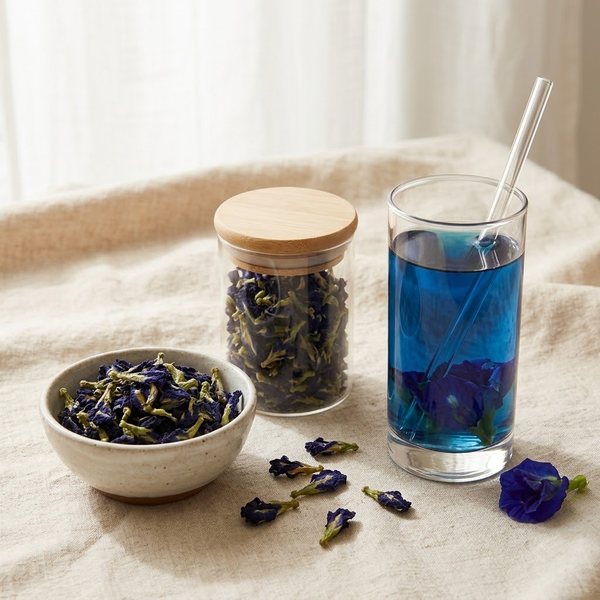
Whole dried petals are the traditional form — look for deep indigo color and whole, unbroken flowers. A small bag brews dozens of glasses, and most quality supplies come straight from Thai farms.
Browse dried butterfly pea flowers on Amazon →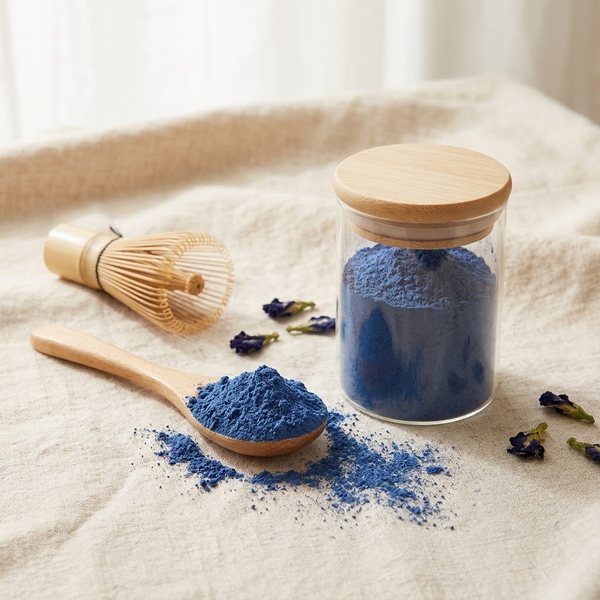
Finely ground petals that dissolve instantly — the shortcut for blue lattes, color-changing lemonade, and baking. No steeping or straining required.
Browse butterfly pea powder on Amazon →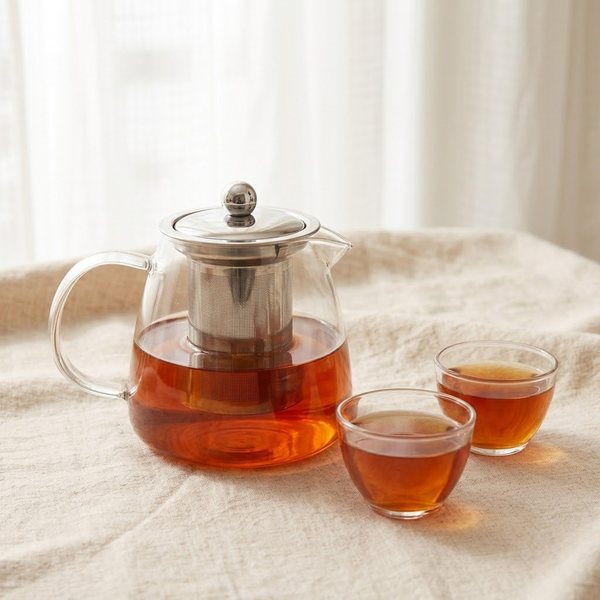
Half the joy of anchan is watching the color bloom — brew it in glass, not a mug. Any borosilicate teapot with a removable infuser does the job for this and every other loose-leaf tea on this site.
Browse glass teapots on Amazon →Nam anchan vs. cha yen: which one when?
They're opposites that belong in the same fridge. Cha yen is bold, creamy, caffeinated, and sweet — an afternoon indulgence. Nam anchan is light, caffeine-free, barely sweetened, and endlessly photogenic — an anytime refresher, including right before bed. If you're hosting, serve both: one orange, one blue, and let the lime wedge do a magic trick at the table. For more of the lime-forward side of Thai drinks, see our Thai lime tea guide.
FAQ
What is butterfly pea flower tea?
A caffeine-free herbal infusion made from the dried blue petals of the Clitoria ternatea plant. In Thailand it's called nam anchan and is usually served iced with honey and lime.
Why does it change color?
Its anthocyanin pigments are pH-sensitive. Neutral water keeps the tea royal blue; add lime or lemon juice and it shifts to violet, then bright purple-pink. It's natural plant chemistry, not food coloring.
Does butterfly pea flower tea have caffeine?
No — it's 100% caffeine-free, because it isn't made from the tea plant at all. That makes it a great evening drink and a good swap if you're cutting back.
What does it taste like?
Very mild: lightly earthy and woody with a faint vegetal note, like a delicate green tea. Thai vendors build the flavor with lemongrass, honey, and lime.
Is it safe to drink every day?
For most people yes — it's a gentle tisane consumed daily across Southeast Asia. If you're pregnant, nursing, or on medication, check with your doctor before adding any herbal drink to your routine.
Keep reading
- Why is Thai tea orange? (The dye story anchan doesn't need)
- Thai lime tea: the citrus side of the menu
- How much caffeine is in Thai tea?
Disclosure: this page contains affiliate links. As an Amazon Associate, Chaayen earns from qualifying purchases at no extra cost to you. This content is for general information only and is not medical advice.